
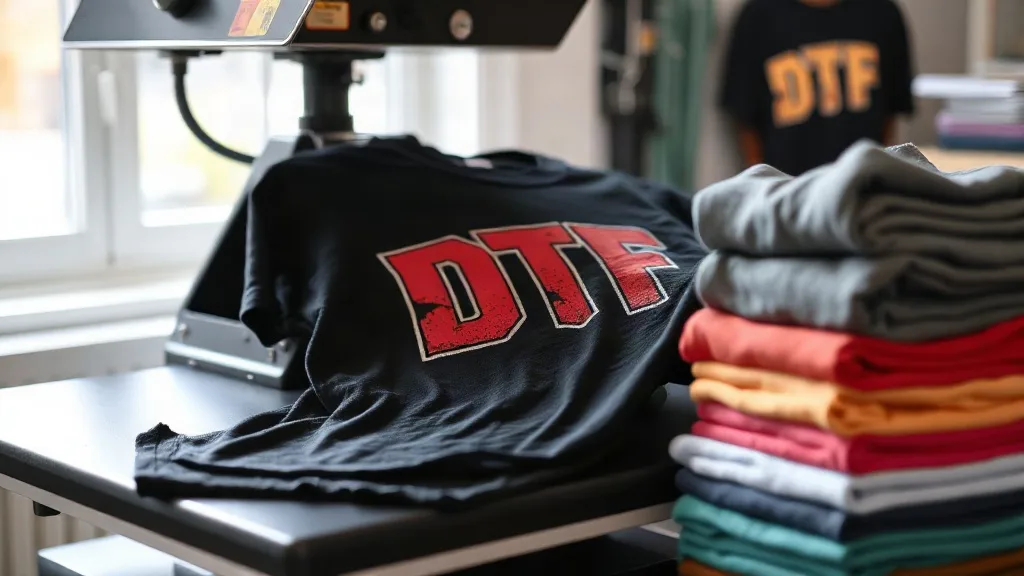
If you run a DTF printing operation, you already know that the heat press and the transfer film get all the attention. But after a few hundred shirts, you realize the blank is the variable that quietly decides whether a customer comes back or asks for a refund. I have been printing DTF transfers for small brands and local teams for over three years, and I have learned that the difference between a print that survives fifty washes and one that cracks by the tenth often comes down to the garment, not the transfer.
In this guide, I want to share what I have learned about two blank lines that keep showing up in my shop: shaka wear and smart blanks. Neither is a magic bullet, but each has a place in a well-run DTF workflow. I will walk through the practical differences, the mistakes I have made, and how to choose the right blank for your next run.
Why the Blank Matters More Than You Think
DTF transfers are versatile, but they are not magic. The ink sits on a thermoplastic polyurethane (TPU) film that is heat-pressed into the fabric. If the fabric has a loose weave, a heavy silicone finish, or a high synthetic content that cannot handle the press temperature, the transfer will fail no matter how good your printer is. I have seen beautiful gangsheets ruined because someone grabbed a bargain bin polyester blend that could not take 320°F for fifteen seconds.
So when I evaluate a blank, I look for three things: consistency, heat tolerance, and surface texture. Consistency matters because a gangsheet is built for a specific shirt size and style. If the blank shrinks or varies in thickness, your placement will drift. Heat tolerance matters because DTF presses run hot, and some fabrics scorch or melt. Surface texture matters because a very smooth, tightly woven fabric gives the best adhesion and the cleanest edge.
Shaka Wear: The Streetwear Workhorse
Shaka wear has become a go-to for many small brands because it balances weight and price. Their tees tend to be heavier than a standard promotional blank, often in the 5.5 to 6.5 oz range, which gives the print a solid foundation. In my experience, the tighter knit of shaka wear tees means less texture showing through the transfer, so fine details and small text stay crisp.
One thing I appreciate is the consistency from batch to batch. When you are printing a run of fifty shirts for a local band, you do not want to discover that the second box of blanks has a different hand feel. Shaka wear has been reliable in that regard, and their size grading is predictable, which helps when you are lining up a gangsheet with multiple sizes.
Where Shaka Wear Shines
- Streetwear and retail cuts: The fits are modern, so customers do not feel like they are wearing a uniform.
- DTF adhesion: The cotton-rich blends take transfers well, provided you follow the press settings.
- Wash durability: I have tracked a few test shirts through twenty home washes, and the prints held up without cracking or fading.
Things to Watch
Not every shaka wear style is identical. Some of their lighter weights and fashion blends can behave differently under the press. I always ask for a sample or test a single shirt before committing a full gangsheet. Also, their darker colors sometimes require a slightly longer press or a second press cycle to fully cure the adhesive, especially on the heavier fabrics.
Smart Blanks: The Budget-Friendly Option That Surprises
When I first heard about smart blanks, I assumed they were just another low-cost import. But after running a few jobs, I found they offer a solid value proposition for high-volume, price-sensitive orders. The fabric is generally a cotton-poly blend, which takes DTF transfers well, and the surface is smooth enough for detailed prints.
The key with smart blanks is to manage expectations. They are not as heavy as a premium streetwear blank, and the fit is more traditional. But for a gym fundraiser or a school event where the budget is tight, they deliver a print that looks professional and holds up reasonably well. I have used them for a 5K run event where the shirts were worn once and washed a few times, and the transfers stayed intact.
Best Use Cases for Smart Blanks
- Large orders with tight budgets: The cost per unit leaves room for a healthy margin.
- One-time events: When the shirt is a souvenir, not a daily wear item.
- Testing new designs: Before committing to a premium blank, I print a sample on smart blanks to check colors and placement.
Limitations to Keep in Mind
The lighter weight means the shirt may not drape as nicely as a premium blank, and the print may feel slightly more prominent on the fabric. For some customers, that is fine; for others, it is a dealbreaker. I always show clients both options and let them feel the difference. Also, because smart blanks can vary slightly between production runs, I recommend ordering the full quantity at once rather than piecing together from different batches.
How I Choose Between Them
My decision usually comes down to the end customer. If I am printing for a brand that wants a retail-ready feel and plans to sell the shirt at a premium price, I reach for shaka wear. The heavier fabric and modern fit justify the higher cost. If I am printing for a local sports team, a school club, or a promotional giveaway, smart blanks keep the project profitable without sacrificing too much quality.
There is also a middle ground: I sometimes use shaka wear for the front print and smart blanks for the back, but that is rare. More often, I mix them within an order based on size availability. For example, if a client needs a few extended sizes that are out of stock in one line, I will substitute from the other, as long as the color matches closely. That flexibility has saved more than one deadline.
Press Settings That Work for Both
While each fabric is different, I have found a baseline that works for most shaka wear and smart blanks styles:
- Temperature: 310°F to 320°F (155°C to 160°C). Start at the lower end for lighter fabrics.
- Pressure: Medium to firm, enough to press the transfer into the weave without crushing it.
- Time: 10 to 15 seconds for the press, then a 5-second peel after cooling slightly.
- Peel: Warm peel for most DTF transfers, but check the film instructions.
Always do a test press on a scrap piece of the same fabric. I keep a bin of cut-off sleeves and hem scraps for this purpose. It takes two minutes and can save an entire gangsheet.
Common DTF Mistakes I See with These Blanks
Even good blanks can fail if you skip the basics. Here are the mistakes I see most often:
- Not pre-pressing: Moisture in the fabric can cause the transfer to bubble. Always pre-press for 5 seconds to remove wrinkles and moisture.
- Over-pressing: Too much heat or pressure can cause the TPU film to bleed into the fabric, making the print look dull.
- Cold peel too soon: Peeling while the transfer is still hot can stretch the film and distort the design.
- Ignoring fabric content: A 100% polyester performance shirt may require a lower temperature than a cotton blend.
I learned these the hard way, and now they are part of my standard operating procedure for every job, whether I am using shaka wear or smart blanks.
Frequently Asked Questions
Can I use DTF transfers on both Shaka Wear and Smart Blanks?
Yes, both lines are compatible with DTF transfers. The key is to adjust your press settings based on the specific fabric weight and blend. Always test a sample first.
Which blank is better for long-term wear?
In my experience, shaka wear tends to hold up better over many washes due to its heavier weight and tighter knit. smart blanks are fine for occasional wear but may show more wear over time.
Do Smart Blanks shrink after washing?
They can shrink slightly, like most cotton blends. I recommend pre-washing or accounting for shrinkage when ordering sizes. shaka wear also may shrink, but I have found it to be minimal.
What is the best way to store DTF transfers before pressing?
Keep them in a cool, dry place away from direct sunlight. I store mine flat in a drawer or hang them on a rack. Avoid folding them sharply, as creases can affect the transfer.
Can I mix Shaka Wear and Smart Blanks in the same order?
Absolutely, as long as the colors match closely and you are transparent with your client about the different brands. I do this when certain sizes are unavailable, and it has worked well for me.
Final Thoughts
Choosing the right blank is not about finding the cheapest or the most expensive option. It is about matching the garment to the job. shaka wear gives you a premium feel that supports higher prices and repeat customers. smart blanks give you a budget-friendly option that still produces a professional-looking print. By understanding the strengths and limits of each, you can build a DTF workflow that keeps clients happy and your margins healthy.